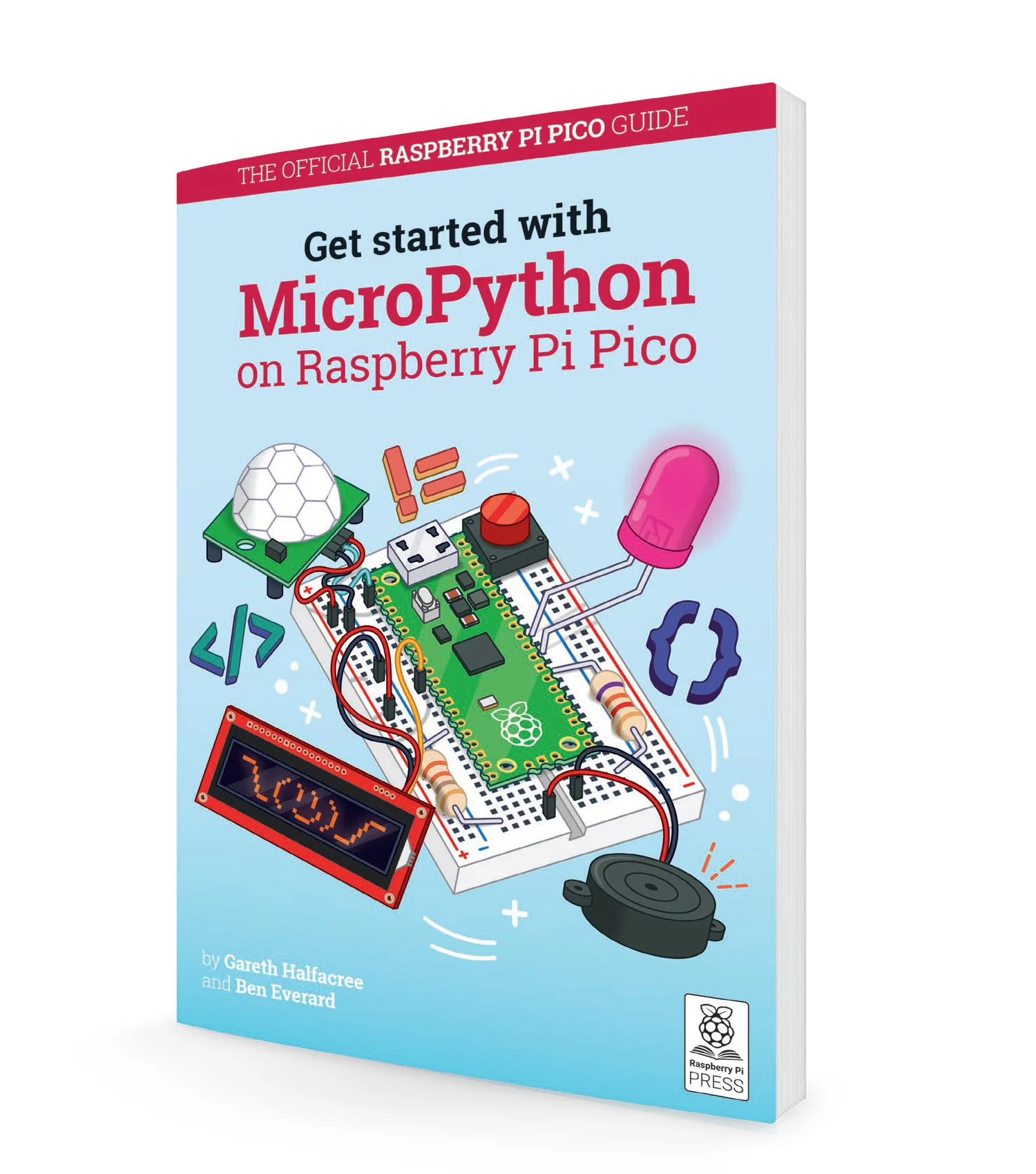
Get Started with MicroPython on Raspberry Pi Pico, 2nd Edition
Learn to program the Raspberry Pi Pico using MicroPython with this fully updated second edition. Now covering the Pico W with Wi-Fi and Bluetooth connectivity, this official guide takes you from basics to building networked IoT projects.
Through hands-on projects including a traffic light controller, reaction game, burglar alarm, and data logger, you'll master physical computing and learn to connect your Pico to the Internet of Things.
What You'll Learn
- MicroPython Programming – Write programs in this beginner-friendly language
- Physical Computing – Control LEDs, sensors, and electronic components
- Wi-Fi Connectivity – Connect Pico W to networks and the IoT
- Bluetooth Low Energy – Communicate with phones, tablets, and other devices
- Communication Protocols – Work with I2C and SPI devices
Chapter Overview
- Chapter 1–2: Getting started with Pico and MicroPython
- Chapter 3–4: Physical computing fundamentals
- Chapter 5–9: Hands-on projects (traffic light, reaction game, burglar alarm, temperature gauge, data logger)
- Chapter 10: I2C and SPI protocols
- Chapter 11–12: Wi-Fi and Bluetooth connectivity
- Appendices: Specifications, pinout guide, programmable I/O
Ideal For
- Beginners to microcontroller programming
- Raspberry Pi Pico and Pico W owners
- Makers interested in IoT projects
- Educators teaching electronics and programming
Product Information
Product Information
Shipping & Returns
Shipping & Returns
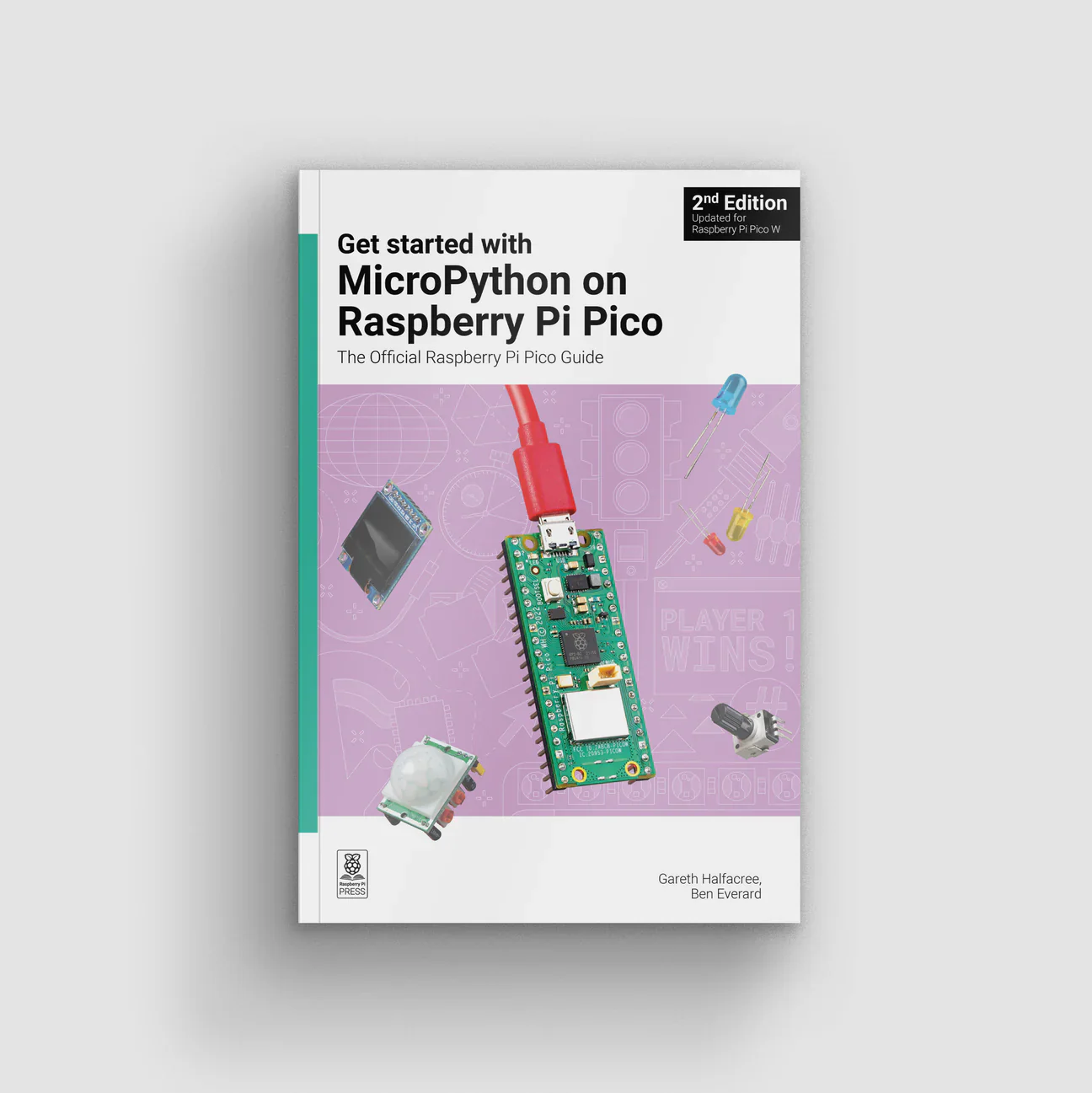
Get Started with MicroPython on Raspberry Pi Pico, 2nd Edition
Get Started with MicroPython on Raspberry Pi Pico, 2nd Edition
Learn to program the Raspberry Pi Pico using MicroPython with this fully updated second edition. Now covering the Pico W with Wi-Fi and Bluetooth connectivity, this official guide takes you from basics to building networked IoT projects.
Through hands-on projects including a traffic light controller, reaction game, burglar alarm, and data logger, you'll master physical computing and learn to connect your Pico to the Internet of Things.
What You'll Learn
- MicroPython Programming – Write programs in this beginner-friendly language
- Physical Computing – Control LEDs, sensors, and electronic components
- Wi-Fi Connectivity – Connect Pico W to networks and the IoT
- Bluetooth Low Energy – Communicate with phones, tablets, and other devices
- Communication Protocols – Work with I2C and SPI devices
Chapter Overview
- Chapter 1–2: Getting started with Pico and MicroPython
- Chapter 3–4: Physical computing fundamentals
- Chapter 5–9: Hands-on projects (traffic light, reaction game, burglar alarm, temperature gauge, data logger)
- Chapter 10: I2C and SPI protocols
- Chapter 11–12: Wi-Fi and Bluetooth connectivity
- Appendices: Specifications, pinout guide, programmable I/O
Ideal For
- Beginners to microcontroller programming
- Raspberry Pi Pico and Pico W owners
- Makers interested in IoT projects
- Educators teaching electronics and programming
Original: $9.96
-65%$9.96
$3.49Product Information
Product Information
Shipping & Returns
Shipping & Returns
Description
Learn to program the Raspberry Pi Pico using MicroPython with this fully updated second edition. Now covering the Pico W with Wi-Fi and Bluetooth connectivity, this official guide takes you from basics to building networked IoT projects.
Through hands-on projects including a traffic light controller, reaction game, burglar alarm, and data logger, you'll master physical computing and learn to connect your Pico to the Internet of Things.
What You'll Learn
- MicroPython Programming – Write programs in this beginner-friendly language
- Physical Computing – Control LEDs, sensors, and electronic components
- Wi-Fi Connectivity – Connect Pico W to networks and the IoT
- Bluetooth Low Energy – Communicate with phones, tablets, and other devices
- Communication Protocols – Work with I2C and SPI devices
Chapter Overview
- Chapter 1–2: Getting started with Pico and MicroPython
- Chapter 3–4: Physical computing fundamentals
- Chapter 5–9: Hands-on projects (traffic light, reaction game, burglar alarm, temperature gauge, data logger)
- Chapter 10: I2C and SPI protocols
- Chapter 11–12: Wi-Fi and Bluetooth connectivity
- Appendices: Specifications, pinout guide, programmable I/O
Ideal For
- Beginners to microcontroller programming
- Raspberry Pi Pico and Pico W owners
- Makers interested in IoT projects
- Educators teaching electronics and programming